


RETROREFLECTIVE BEADS made FROM NATURAL POLYLACTIC ACID
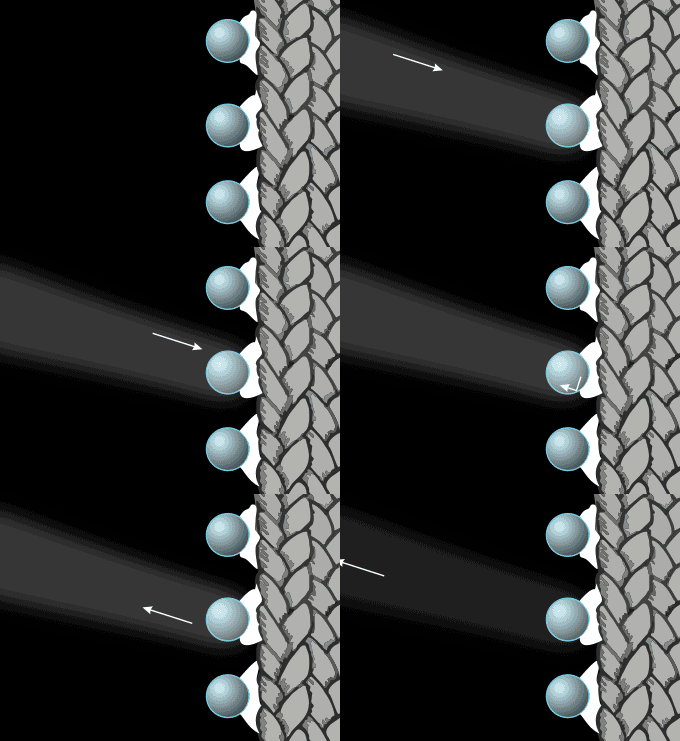
Each retroreflective bead is manufactured from polylactic acid (PLA). The polymeric compound is derived from renewable resources, such as bagasse (leftovers from sugarcane processing), and comprised of natural monomers.

Each retroreflective element is within the micrometre range of 0.1–500. In some embodiments, the preferred dimensional range for each element lies within 300–500 microns.

Sugarcane production

Bagasse waste collection

Fermentation of
sugar


Lactide production from lactic acid
Polymerization
Natural microbeads
India is the second-largest cane-growing nation in the world, producing 349.18 million tons annually (more than 18% of the world's production).
The fiber that remains after the juice has been extracted from the sugarcane plant is usually wasted after sugarcane production.
The sugar in the bagasse is fermented to produce lactic acid.
Lactide is needed
to manufacture polymers.
Lactide is polymerized
into polylactide.
Natural microbeads are produced from polylactide as a substitute for plastic microbeads.
NATURAL MICROBEAD MANUFACTURING PROCESS

NON-TOXIC,
BIODEGRADABLE GLUE
All the primary raw materials used to make gelatin-based glue, or protein glue, can be found in your kitchen. Gelatin is a common protein that is extracted from collagen by boiling. Creating a strong, biodegradable adhesive from gelatin requires the addition of sugar, Epsom salt, water, and glycerin.

Pharmaceutical and nutritional companies produce a significant amount of leftover gelatin netting when developing medicinal capsules. The glue we use is made by recycling those leftovers into a non-toxic adhesive.
Non-toxic,
recyclable,
and eco-friendly
Superior performance
with a variety of
substrates
Short
set
times
Almost
entirely
odourless
Transparent
or faint yellow
in colour
ORGANIC LONG PERSISTENT LUMINESCENT MATERIAL
Glow-in-the-dark
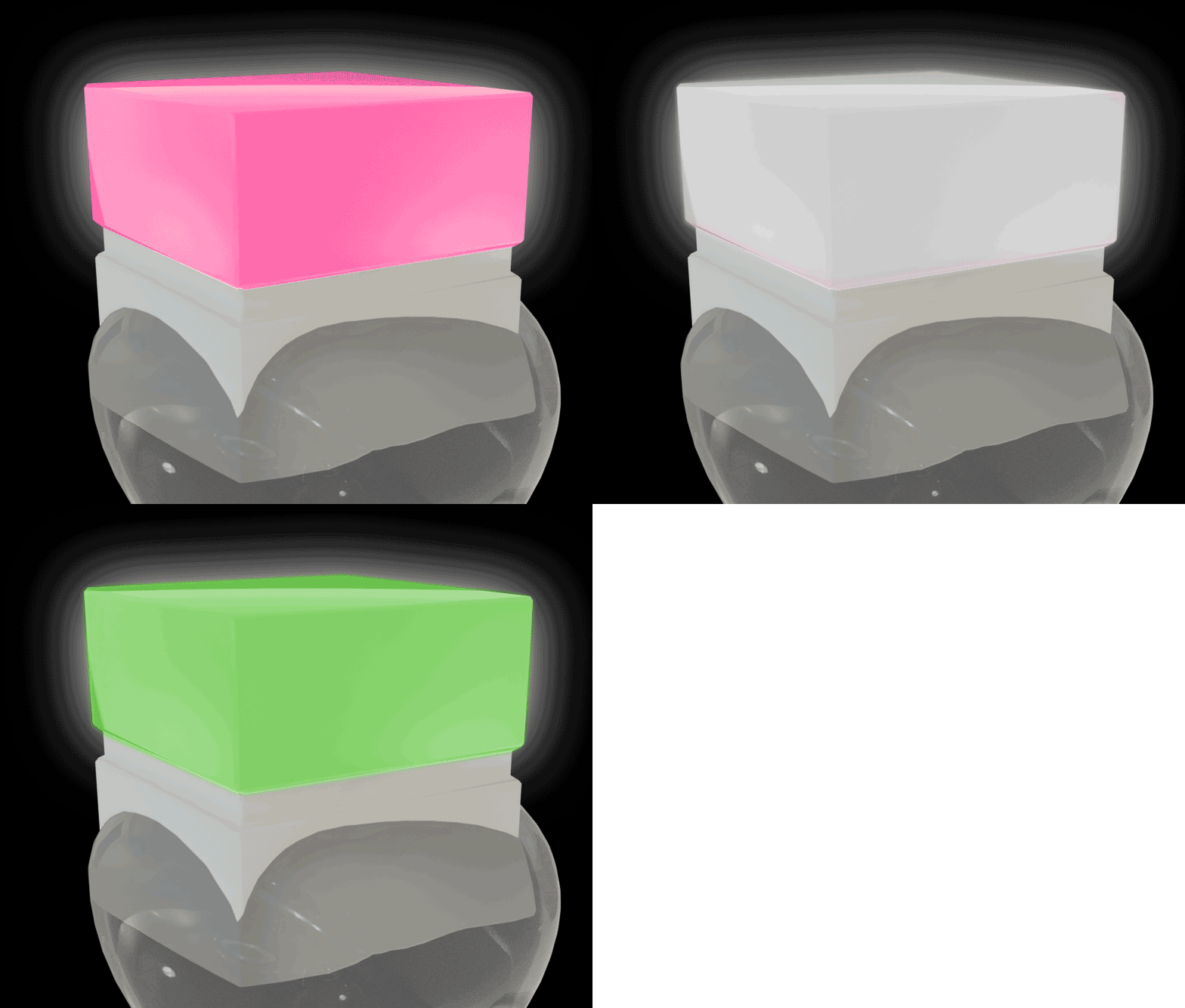
materials can store absorbed photon energy and emit light for long periods of time. While inorganic long-persistent luminescence (LPL) materials are crystalline and often require rare metals, organic LPL (OLPL) materials are flexible and do not require rare metals
Our OLPL system
is based on emissions from excited complexes (exciplexes) upon the recombination of long-lived, charge-separated states. They can be excited by a standard white LED light source to generate long emissions, lasting several hours. Our OLPL system is transparent, soluble, flexible, and color tunable.
